
An ice cream cart can bring individually wrapped frozen treats to an office, school, community gathering, or private celebration. Good planning starts with the venue, guest count, service window, and a clear choice of wrapped popsicles and Drumstick-style bars.
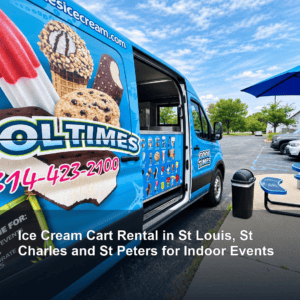
Actual Cool Times blue ice cream truck with its logo and frozen treat decals, no people visible
The short answer
Ice cream cart rental in St. Louis, St. Charles, and St. Peters gives event organizers a flexible way to serve individually wrapped frozen treats at workplaces, schools, parties, and community events. Cool Times Ice Cream operates trucks and carts in the region. For this event format, the planning focus is on packaged treats such as wrapped popsicles and Drumstick-style chocolate-coated bars, plus the service window and venue setup. The event host should confirm the current cart or truck option, service area, date availability, item selection, guest estimate, and site requirements directly with Cool Times. A cart is not the same as a full mobile truck visit, so discuss access, indoor rules, power or placement needs, and how guests will move through the serving area. Early details help the provider recommend an appropriate arrangement without promising a specific menu or date before confirmation.
Choose between a truck visit and a cart setup
Cool Times Ice Cream offers event service using trucks and carts, and the right format depends on the venue and event plan. A truck visit requires appropriate outdoor access, parking, and a safe service area. A cart may suit an indoor or constrained setting where a vehicle cannot approach the guests, subject to the company’s current setup requirements. Ask the provider which option is available for your date, address, event size, and service window. Do not assume that a cart includes the same selection, capacity, or logistics as a truck; verify those details before sharing the plan with guests.
Why wrapped treats can work well for events
Individually wrapped frozen treats are convenient to count, distribute, and handle at many gatherings. Guests can select a packaged item and take it to a designated eating area, while the host can estimate quantities from a confirmed menu. Wrapped products may be easier to manage than foods requiring on-site assembly, though the venue still needs a suitable serving location and waste plan. Product availability can change. Confirm which packaged popsicles and chocolate-coated cone bars are offered for the date rather than relying on a prior event photo or an old menu.
Plan the event location carefully
Provide the full address, venue name, room or entrance, event contact, and instructions for loading or delivery. For a truck, confirm vehicle access, turning space, parking permission, surface conditions, and how traffic will be managed. For an indoor cart, confirm doorway widths, elevator access, floor protection, and whether the property allows food service equipment. Ask whether staff need a loading dock, nearby parking, or a specific route. A site contact who can answer questions on event day helps avoid delays caused by locked doors or unclear directions.
Estimate guest count and service pace
Share the expected number of attendees, arrival pattern, age range, and length of the serving window. A short break with many guests may need a different plan than an open-house event where arrivals are spread out. Ask Cool Times how it recommends estimating product quantities and what happens if attendance changes. Do not assume every guest will take one item or that a particular service rate is guaranteed. A realistic estimate helps the provider discuss inventory and staffing, while the host can avoid scheduling the cart during a moment when everyone is expected to be elsewhere.
Select a manageable wrapped menu
For an event centered on wrapped popsicles and Drumstick-style bars, choose a concise mix that suits the audience and the provider’s current inventory. Consider flavor variety, chocolate coatings, and whether guests need a choice between fruit-style pops and cone bars. Ask about product names and ingredient information if relevant. Do not announce an item until its availability is confirmed. For a large group, fewer clearly communicated options may make selection faster and reduce confusion. Keep a copy of the agreed menu and the provider’s confirmation for the event lead.
Ask about allergies and dietary information
Packaged products may have ingredient labels, but the host should ask the provider what product information will be available at the event. Guests with food allergies should be able to review packaging and make their own decision. Do not promise that products are allergen-free or that cross-contact is impossible unless the manufacturer and provider can substantiate it. If a guest has a serious allergy, the event organizer should consider whether the menu is appropriate and communicate the limits clearly. The safest plan is transparent product information, not an assumption based on appearance.
Set a service window that fits the schedule
Choose a start time and duration that avoid competing with speeches, class transitions, meal service, or employee meetings. Tell the provider whether all guests will arrive together or in waves. Confirm arrival time, setup buffer, service end, and the person authorized to approve changes. A realistic window gives the staff time to serve attendees and pack up without obstructing the next activity. If the event schedule changes, notify the company as early as possible and ask whether the revised timing can be accommodated.
Coordinate venue rules and indoor access
Schools, offices, community centers, and private venues may have rules about vendors, food, insurance, carts, elevators, and cleanup. Ask the property manager what documentation is required and share those requirements with Cool Times before booking. Confirm whether the cart can be positioned near the guests without blocking exits, accessible routes, fire equipment, or normal operations. For an outdoor truck, identify weather contingencies and where guests may safely queue. Written approval from the venue can prevent an event-day cancellation or a last-minute move.
Make the serving area easy to approach
Place the cart or truck where guests can see it and form a line without blocking entrances or pathways. Consider shade, lighting, nearby trash and recycling, mobility access, and separation from vehicle traffic. At a school or family event, designate adults to supervise children and explain how students will approach the service point. For a workplace, choose a location that does not disrupt customer access or essential operations. The host should identify who will direct guests and who can contact the provider if the layout needs adjustment.
Prepare for weather and temperature
Frozen treats require appropriate temperature control, and outdoor conditions can affect both guest comfort and event operations. Ask the provider how products are transported and served and what weather conditions may alter a truck or cart plan. The host can identify a covered area or an indoor alternative where the venue permits it. Avoid leaving packaged frozen products unattended after service. Confirm who is responsible for the products, equipment, and cleanup during and after the event. The provider should explain its handling process and any requirements for the host.
Budget with a written event confirmation
Ask for a written estimate that describes the service format, date, address, service window, product plan, fees, travel or setup charges if applicable, payment schedule, cancellation terms, and any minimums. Ask whether the quote is based on an estimated guest count or a fixed package. Confirm what is included and whether taxes or additional charges may apply. Keep the final invoice and agreement available to the event lead. A written confirmation helps both parties align expectations, but the organizer should still verify any important change by phone or email.
Communicate the plan to guests
Send attendees a brief, accurate note with the service time, location, and expected selection. If items may run out or a specific product is not confirmed, do not promise it in advance. Tell guests where to find ingredient labels or whom to ask about product details. At a school, follow communication and allergy policies. In a workplace, confirm whether participation is optional and how the event fits shift coverage. Clear communication helps guests enjoy the service without creating assumptions about cost, quantity, or availability.
Keep the event orderly and welcoming
A designated host can welcome the provider, confirm the setup, direct guests, and answer questions about timing. Use one queue where possible and keep an accessible route clear. If the host is covering a large group, consider staggered arrival or separate service windows. Do not let children operate equipment or enter a truck area. The provider’s staff manage service, while the event organizer manages the venue and attendees. Agree in advance who handles spills, waste, or a change in location.
St. Louis area planning for Cool Times
Cool Times Ice Cream serves the St. Louis region, with event planning relevant to St. Louis, St. Charles, and St. Peters, Missouri. Confirm the specific address is within the current service area and that trucks or carts are available on your date. Share the event type, expected attendance, venue access, and preferred wrapped treat categories. The company can confirm the current menu, service format, pricing, and booking requirements. Service boundaries and availability should be verified directly rather than inferred from a city name.
A practical booking checklist
Before confirming, have the event date, start and end time, full address, estimated guest count, indoor or outdoor setting, truck or cart preference, venue contact, loading instructions, and product questions ready. Ask what is included, what the venue must provide, how a schedule change is handled, and when final details are due. Save the confirmation and share it with the event lead. On event day, make sure access is open, the serving area is ready, and the contact person can be reached. A brief checklist prevents small logistical gaps from overshadowing the event.
Plan for children and school schedules
For a school event, coordinate the service time with recess, dismissal, lunch, or another approved break. Ask the school who can authorize vendor access and whether families need advance notice. Estimate the number of students and staff expected at the service point, and identify a backup adult if the event lead becomes busy. Follow the school’s food allergy and student supervision policies. Wrapped items can simplify distribution, but the school should still communicate ingredient information and ensure the line does not block accessible paths or emergency routes.
Workplace events need shift coverage
A company event should account for employees who work different shifts, customer-facing roles, and staff who cannot leave a station at the same time. Consider staggered service windows or a location employees can visit without leaving essential duties uncovered. Tell Cool Times if the service is for one department or the whole workforce. Ask whether the agreed time can cover all groups and how remaining product is handled. Avoid advertising a company-wide treat event if only some shifts can participate; clear scheduling supports fairness and attendance.
Community events require crowd flow planning
For a neighborhood or public gathering, estimate peak arrivals, not only total attendance. Position the cart or truck near the event but outside vehicle paths and emergency access. Coordinate with event security or site staff about queue lines, crowd announcements, and waste bins. If attendees arrive in waves after a performance or game, let the provider know. A single service point may create a long line at peak time; discuss whether an alternate schedule or location is possible. The event organizer remains responsible for crowd management and venue rules.
Confirm what the provider brings
Ask whether the provider supplies the cart, staff, serving utensils if needed, product display, power requirements, and waste containers, and what the host must provide. Do not assume a previous event’s setup represents the current package. Confirm who is responsible for equipment placement, maintaining access, and cleanup. If the venue requires insurance documents or vendor registration, send the requirement early. A written responsibility list prevents both the host and provider from discovering on arrival that a key item or approval is missing.
Have a clear weather or venue-change plan
Outdoor events can be affected by rain, heat, wind, or site access restrictions. Ask what conditions may require a change or cancellation and how the contract handles those circumstances. Identify an indoor alternative only if the venue and provider confirm it is workable for the cart or truck. Make sure the organizer can contact the decision-maker on event day. A contingency plan should identify who decides, by what time, and how guests will learn about a change.
Keep food service separate from event assumptions
A cart or truck visit is a service arrangement, not a guarantee that every attendee will receive a preferred item or that a particular quantity remains available throughout the event. Confirm the inventory plan with the provider and communicate the selection accurately. If the organizer needs to serve a fixed number of guests, ask how that requirement should be handled in the booking. Do not make an unsupported promise about product availability or ingredients. Clear expectations help guests and the service team respond calmly if demand differs from estimates.
After the event, record what worked
Note attendance, service duration, guest feedback, menu requests, access issues, and any schedule changes. This gives the organizer a useful basis for planning the next event and gives Cool Times concrete feedback if the host chooses to share it. Confirm that the venue is clean and equipment has been removed before closing the site. Keep the invoice and booking details with event records. A short review can improve future layout, quantities, and timing without assuming every gathering will have the same attendance pattern.
Confirm billing and attendance expectations
Before booking, ask how the provider calculates charges, when payment is due, what happens if attendance is higher than estimated, and whether a minimum applies. Clarify whether the organizer pays a fixed amount or guests pay individually, if that option is offered. Confirm cancellation and rescheduling terms in writing. Share the agreed payment process with whoever handles event funds so the provider is not asked to renegotiate at arrival. Clear billing expectations make it easier to approve the event and avoid confusion afterward.
Assign one event-day decision maker
Choose one person who can approve a location adjustment, answer the provider’s call, and coordinate with venue staff. Share that person’s mobile number with Cool Times and make sure a backup contact is available. The decision maker should know the approved schedule, service format, menu, payment plan, and weather contingency. Without an identified contact, several people may give conflicting directions or a provider may wait for an approval nobody has authority to give. A single point of contact makes event-day coordination easier.
Keep access and accessibility in view
The route to a cart should accommodate guests who use mobility aids and should not force people through a vehicle lane or narrow doorway. Confirm elevator access, turning space, floor transitions, and queue width with the venue. Place signs where guests can see the service without obscuring exits. If an accessible route differs from the main line, tell staff how guests can be served with dignity. These details should be checked during the site walkthrough rather than left until the cart arrives.
Frequently asked questions
Does Cool Times Ice Cream offer carts as well as trucks?
Cool Times provides truck and cart event service. Confirm which option is available and appropriate for the venue and date.
Can an ice cream cart work indoors?
A cart may suit some indoor venues, subject to access, property rules, and provider requirements. Confirm doorway, elevator, placement, and cleanup details.
What kinds of treats should we ask about?
Ask about the current individually wrapped popsicles and Drumstick-style chocolate-coated bars available for your event date.
Does Cool Times serve St. Charles and St. Peters?
The company serves the St. Louis region. Confirm the specific venue address and current service availability directly.
How many treats should I order?
Share expected attendance and the service schedule, then ask the provider how it recommends estimating quantities for your event.
Can the host guarantee allergy-free products?
Do not promise that without verified product information. Ask about ingredient labels and let guests with allergies review packaging.
What should we prepare for a truck visit?
Confirm vehicle access, parking permission, safe queue placement, event contact, and weather arrangements with both the venue and provider.
How far ahead should I book?
Availability varies by date and season. Contact Cool Times early and confirm the booking in writing.
Can the menu be customized?
Ask about current product selection and any event-specific options. Menu and inventory should be confirmed for the date.
What information is needed for an estimate?
Provide date, time, address, guest count, venue type, preferred truck or cart format, and access details.