
A mobile ice cream cart can make a school event easier to serve indoors or in a defined activity area. Here is how to coordinate timing, treat counts, access, and wrapped novelty selections across the St. Louis region.
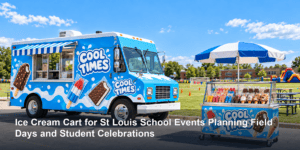
Blue Cool Times ice cream truck and branded treat cart at an outdoor school field-day setting
The short answer
Schools planning a field day, end-of-year celebration, staff appreciation event, or student reward day often need a dessert option that can serve guests without a complicated setup. An ice cream cart can work in a gym, courtyard, or designated outdoor area when a truck cannot reach the serving point; a truck can create a visible event arrival when vehicle access is available. Cool Times Ice Cream offers truck and cart event service in the St. Louis area. Hosts should confirm current service coverage in St. Louis, St. Charles, and St. Peters, choose individually wrapped frozen novelties, and coordinate school access, student flow, timing, and cleanup in advance.
Choose between a truck and a cart for the school site
A truck and a cart create different event setups. A truck can serve guests at an accessible curb, lot, or outdoor staging area and provide a recognizable event focal point. A cart can be delivered to a location where a vehicle cannot park, including some indoor spaces or areas with limited access. The school’s layout, fire lanes, entrances, electrical and parking rules, and expected foot traffic determine which option fits.
Before booking, share the venue address, event area, access route, surface, stairs or ramps, and any restrictions on vehicles or vendor equipment. Ask whether the cart party includes delivery and pickup, what footprint it needs, and whether staff will serve from it. Cool Times lists truck and cart event options; confirm the current package and availability. Do not assume that a cart can pass through every doorway or that a truck can park at any campus entrance.
Estimate attendance and plan a clear serving window
A school event may have several grades, rotating activity stations, staff, volunteers, and visitors. Estimate how many people may request a treat and whether students will arrive at once or in waves. The vendor can use the expected attendance and schedule to discuss quantity, service window, and menu. If student groups rotate every fifteen minutes, the plan should allow enough time for travel and a line without interrupting classes or activities.
Build a schedule that names the event lead, arrival time, serving start, expected peak, last call, and pickup or departure. Share any school bell schedule, dismissal restrictions, or campus lockup time. Ask how the vendor handles a delay, weather change, or a larger-than-expected group. Make sure the service window is realistic for the number of guests; an event that is too short can create a crowded line even when there are enough treats.
Plan student flow before the cart arrives
Place the truck or cart where students can approach safely without crossing vehicle routes, blocking entrances, or crowding emergency access. Use the school’s event map and designate an adult or staff member to guide each group. If students will come from different activity stations, identify a queue lane and a return path. Younger children may need additional staff support to prevent pushing or confusion.
Ask the vendor what area is needed for service and whether the cart can be positioned before the event begins. Keep the line away from doors, athletic equipment, and accessible routes. If multiple classes are served, use staggered release times or assigned group windows. A simple sign made by the school can explain the queue or menu, but avoid placing student names or personal information on public displays. The vendor’s service area should remain clear of backpacks, sports gear, and unattended equipment.
Select individually wrapped novelties for efficient service
Individually wrapped popsicles, ice cream bars, and drumstick-style treats can be distributed individually, simplifying portion planning and speeding up service. The school and vendor should review the current product list and choose options that suit the event, expected weather, age groups, and budget. Cool Times’ current menu and event inventory should be confirmed when booking.
Do not assume a particular flavor or product will be stocked without checking. Ask whether the vendor can provide a set selection, how substitutions are handled, and whether the school may share a list of preferred options. If the event has restrictions on nuts, dairy, or other allergens, request ingredient and cross-contact information from the product manufacturer and vendor. A host should communicate limitations accurately and avoid describing an item as allergen-free unless that has been verified.
Coordinate food allergy and campus food policies
Before announcing a treat, check school district policies about outside food, food allergies, classroom events, and parent communication. An individually wrapped product may still contain allergens or be processed in a facility that handles them. The school’s nurse, food-service lead, or event coordinator should determine how the event fits the district’s current health plan and individual student accommodations.
Ask the vendor for packaging or ingredient information in advance. Keep wrappers available to staff and do not remove labels before distribution. If the school cannot safely offer a product to every student, plan an inclusive alternative through the appropriate school contact. The vendor can provide product details, but the school controls its student safety policies. Do not ask a vendor to make a medical assurance beyond the information provided on the product label.
Confirm service area in St Louis St Charles and St Peters
The event location affects travel, timing, access, and service availability. Cool Times focuses on truck and cart events in the St. Louis metro, including the locations the host has asked to prioritize: St. Louis, St. Charles, and St. Peters, Missouri. Confirm the exact campus address and requested setup area when asking for a quote; a nearby city name does not automatically establish coverage for every neighborhood or event date.
For a school with multiple buildings or entrances, give the vendor a map pin or written arrival instructions and identify a staff contact who will meet the driver. Ask whether there are travel fees, vendor check-in procedures, insurance documents, or background screening requirements for campus access. The event organizer should verify that the selected service type, date, and product package are available before sharing final details with families.
Review timing parking and weather contingencies
Outdoor school events can be affected by rain, heat, lightning, wind, or changes to the campus schedule. Ask what weather conditions affect service and how a date change or cancellation is handled. Confirm whether the truck needs a paved parking area and whether the cart can be moved under cover. A backup location should be identified if the event shifts indoors, subject to venue approval.
Confirm parking permissions, vehicle routes, loading areas, and arrival windows with the school office or facilities team. The truck should not block bus lanes, accessible spaces, emergency access, or dismissal traffic. If the cart will operate indoors, verify doorway dimensions, floor protection requirements, and approval from the building manager. Put any weather or schedule contingency in writing so the host and vendor know who makes the decision and when.
Set a budget and make the quote easy to compare
Ask for the full cost of the service, including delivery or setup, the selected truck or cart, treat quantities, service time, taxes, and any additional fees. Clarify whether the school pays a set event price, guests purchase items individually, or a sponsor covers the event. The quote should identify what is included and the conditions that could change the final cost.
If the school is comparing vendors, compare the same guest count, time window, menu format, and setup. A lower initial quote may exclude delivery, additional time, or products. Ask whether a deposit is required, when payment is due, and how cancellations or weather changes are handled. Confirm whether a purchase order or vendor onboarding process is required. Keep the approved quote with the event records so the business office and event lead are working from the same terms.
Organize approvals and communication with families
School events may require approval from administration, facilities, food service, a parent organization, or district risk management. Start that process early and provide the vendor’s service description, insurance or licensing materials if requested, arrival plan, and menu information. Confirm who has authority to approve the event and who will make final decisions on the day.
Notify families about the date, location, service window, and how the school will handle allergies or participation. Avoid promising that every product meets every dietary need. If the event is optional or funded by donations, explain how students who do not participate will be included in other activities. Keep communication concise and consistent across school channels. A named point person should be available by phone when the vendor arrives.
Make cleanup and closeout part of the plan
After service, collect wrappers, cups if any, and event waste in the bins designated by the school. Ask whether the vendor provides trash cleanup around the serving area and what cleanup remains the school’s responsibility. Walk the area before students return to regular activities and check that the truck or cart has been removed from the approved route.
Document any schedule issue, product substitution, or incident and share it with the event lead. Save the final invoice, quote, contact details, and notes about attendance for future planning. If the school wants to book another event, feedback about line length, product selection, service time, and location will help refine the next plan. Cool Times provides mobile truck and cart event service; confirm the current operating details directly before arranging another school date.
Design the event around the school day
The best service window fits the event schedule instead of competing with it. For a field day, the organizer can coordinate treat service between activity rotations or after the main events. A short, clear window can help students know where to go while preventing a line from forming in the middle of a class transition. The vendor needs the planned start and finish, likely peak, and any hard stop imposed by dismissal or building access.
Consider the age range, student mobility, staff coverage, and whether families or community guests will attend. For younger grades, group-by-group service may be more manageable than an all-at-once release. For a larger school, separate lines or staggered times may reduce congestion. Share the plan with teachers and event volunteers so they know how to direct students and where the approved serving area is located.
Make the service area accessible and easy to navigate
Choose a serving location that students can reach without crossing active vehicle lanes or blocking accessible pathways. Keep a clear route for wheelchairs and mobility devices, and confirm that the cart can reach the selected site. If students need to use stairs or a narrow corridor to approach, reconsider the location or ask the school facilities lead about an accessible alternative.
Use cones or school-approved signs to show the line and exit path. Place staff where they can assist younger students and monitor movement. Keep the serving area separate from sports play, bus traffic, and emergency access. If the truck is serving from a parking lot, create a pedestrian route that does not bring students behind or around moving vehicles. These small layout decisions make service more orderly and safer for guests.
Create a clear plan for wrapped treat distribution
Individually wrapped novelty treats can make distribution straightforward, but the school should still know what products are being offered and how they will be stored and handed out. Confirm the current selection and packaging with Cool Times when booking, and ask how substitutions will be communicated. If the school is paying for a fixed quantity, agree on how remaining items are handled. If guests purchase individually, ask about payment methods and whether students need cash or another approved option.
Keep product labels available so school staff can answer ingredient questions accurately. A wrapped product is not automatically suitable for every dietary need. Follow school policy about allergens and communicate the available choices without making unsupported guarantees. If the school has individual accommodations, coordinate privately through the appropriate staff rather than announcing student health information in a line. The vendor supplies product information; school leaders determine how it fits campus requirements.
Use a booking checklist to avoid last-minute surprises
Before confirming, send the vendor one concise event brief with date, campus address, expected attendance, preferred truck or cart arrangement, serving window, parking or indoor-access details, selected wrapped treats, and the school contact. Ask for written confirmation of availability, price, what is included, payment terms, weather policy, and any documents required by the school. This creates one shared reference for the vendor and event organizer.
A few days before the event, reconfirm arrival instructions and the day-of contact. Tell the office or facilities team when the vehicle or cart is expected, and make sure the serving location remains available. If the schedule changes, promptly notify the vendor and the staff responsible for students. Advance coordination is especially helpful during busy school seasons in St. Louis, St. Charles, and St. Peters, when multiple community events may be planned on the same dates.
Frequently asked questions
Does Cool Times serve school events in St. Louis?
Cool Times offers event service in the St. Louis area. Contact the company with the campus address and date to confirm current availability and service boundaries.
Can Cool Times serve St. Charles and St. Peters, Missouri?
The event location should be confirmed when requesting a quote. Ask about coverage, travel, timing, and any fees for the specific school address in St. Charles or St. Peters.
Should a school book a truck or a cart?
A truck needs an accessible parking location; a cart may work where a vehicle cannot reach the serving point. Choose based on campus layout, indoor rules, event size, and the planned student flow.
What treats can be served at a school event?
The host can ask about individually wrapped popsicles, ice cream bars, and drumstick-style novelty treats. Confirm the current product list, ingredients, availability, and substitutions with the vendor.
Are treats served individually packaged?
The article focuses on individually wrapped novelty treats, including popsicles and drumstick-style products. Confirm the current product packaging and event menu directly with the company.
How many treats should a school order?
Estimate students, staff, volunteers, and visitors, then discuss quantities with the vendor. The serving schedule and whether treats are complimentary or purchased also affect the order.
Can the cart be used indoors?
A cart may suit some indoor venues, but the school must approve the location, access route, floor protection, doorway clearance, and food-service setup. Confirm these details with both the school and vendor.
How should schools manage allergies?
Review district policies and individual student plans with the appropriate school staff. Request ingredient and packaging information and do not promise a product is allergen-free without verification.
What should be included in an ice cream event quote?
Confirm the truck or cart, location, service window, treat quantities, delivery, setup, taxes, additional fees, cancellation terms, and payment schedule in writing.
How early should a school reserve an ice cream cart?
Availability depends on the season, date, and event size. Contact the vendor early and confirm the booking only after campus approvals and the service details are settled.
What should the school prepare on event day?
Assign a staff contact, provide arrival instructions, reserve the approved serving area, organize queues, share allergy information with the vendor, and communicate the schedule to students and families.
Does the vendor handle cleanup?
Ask what cleanup is included in the package and what remains the school’s responsibility. Plan bins and a staff check of the serving area after the event.